
What is Blockchain?
Blockchain is a decentralized digital ledger that records transactions across multiple computers in a secure and tamper-proof way.
Instead of storing data in one server, blockchain uses a network of nodes—making the data almost impossible to hack or alter.
Blockchain was first outlined by Stuart Haber and W. Scott Stornetta, two researchers who wanted to implement a system where document timestamps could not be tampered with, in 1991. But it was actually implemented in 2009, an anonymous developer named Satoshi Nakamoto created bitcoin using Blockchain and that's when cryptocurrency boomed.
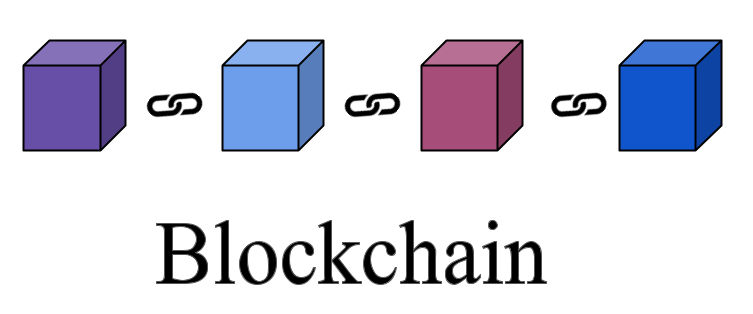
Each block contains some record and this record is connected through a chain. This chain is decentralized which means the access is shared not just with one person, but with entire authority, so it is very difficult to modify the records in the block which makes it reliable.New blocks are always stored linearly and chronologically ,that is, they are always added to the “end” of the blockchain.
Decentralized blockchains are immutable, which means that the data entered is irreversible. For Bitcoin, this means that transactions are permanently recorded and viewable to anyone.
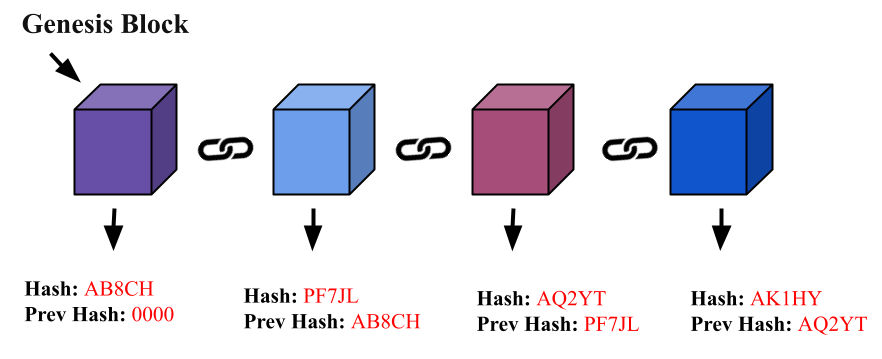
Each block contains Relevant Information/Data (In Bitcoin’s case the relevant information can be from where this is coming and where it will go), Hash (Every block has a unique key/code which is called hash.) Previous block hash. Which helps it in achieving decentralized security and trust in several ways.
-
Since every block contains previous block hash, it becomes easy to track the history of the blocks.
-
The very first block which does not contain the previous block hash is called Genesis Block, which means the very first block.
-
Decentralized blockchains are immutable, which means that the data entered is irreversible. For Bitcoin, this means that transactions are permanently recorded and viewable to anyone.
How Blockchain Works
Blockchain stores data in blocks, and every block is linked to the previous one using cryptography.
Here’s how it works:
- A user requests a transaction
- The transaction is broadcast to peer-to-peer nodes
- The nodes validate the transaction
- A block is created and added to the chain
- The block becomes permanent and unchangeable
This creates a trustless system where no central authority is required.
Key Features of Blockchain
- Decentralized — No central control
- Secure — Cryptographic protection
- Transparent — Anyone can verify data
- Immutable — Data cannot be changed
- Distributed — Stored across a network
Types of Blockchain

1. Public Blockchain
Open to everyone (Bitcoin, Ethereum)
2. Private Blockchain
Restricted access (Used by companies)
3. Consortium Blockchain
Controlled by multiple organizations
4. Hybrid Blockchain
Mix of public + private
Advantages of Blockchain
- High security
- Faster transactions
- Reduced fraud
- Lower operational cost
- Full transparency
- No third-party dependency
Real-World Uses of Blockchain
- Cryptocurrencies (Bitcoin, Ethereum)
- Banking & Payments
- Supply Chain Tracking
- Healthcare Records
- Smart Contracts
- Voting Systems
- NFTs & Digital Assets
Examples of Blockchain in Daily Life
- Paying with crypto
- Tracking product origin
- Digital identity verification
- Property registration
- Online contracts
Blockchain vs Traditional Database
| Feature | Blockchain | Database |
|---|---|---|
| Control | Decentralized | Centralized |
| Security | Very high | Moderate |
| Data Change | Immutable | Editable |
| Transparency | High | Low |
| Speed | Medium | Fast |
Future of Blockchain
Blockchain is expected to grow in:
- Finance
- Healthcare
- Government
- Web3 & Metaverse
- Supply chain automation
- Digital identity
FAQs
1. Why is blockchain important?
Because it provides trust, transparency, and security without intermediaries.
2. Can blockchain be hacked?
Hacking blockchain is extremely difficult due to decentralization and cryptographic security.
3. Is blockchain only used for crypto?
No. It is used in finance, logistics, healthcare, identity systems, and more.
4. Who invented blockchain?
Satoshi Nakamoto introduced blockchain with Bitcoin in 2008.
5. Is blockchain the future?
Yes, blockchain adoption is growing globally across multiple industries.