
Author
Kubernetes is one of the most important tools in modern DevOps and cloud computing. As applications grow larger and more complex, managing them manually becomes difficult and inefficient.
Kubernetes helps developers and organizations run applications efficiently, reliably, and at scale without worrying about infrastructure challenges.
? In simple words: Kubernetes automatically manages multiple containers for you.
Kubernetes is an open-source container orchestration platform used to deploy, manage, and scale containerized applications.
It works with tools like Docker and allows you to run containers across multiple machines in a structured and automated way.
? Instead of handling containers manually, Kubernetes manages everything automatically, saving time and effort.
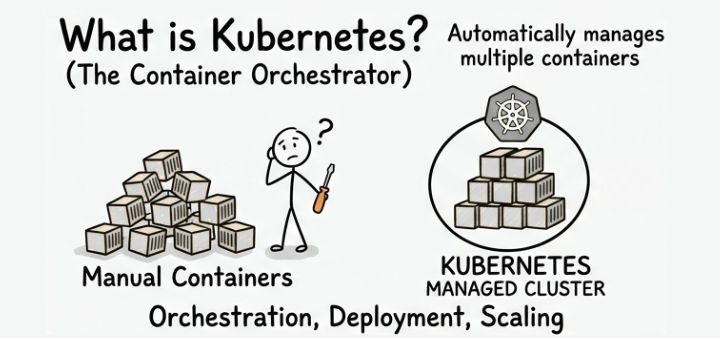
Before Kubernetes, managing containers in real-world applications was difficult:
Kubernetes solves these problems by:
Many beginners get confused between Kubernetes and Docker, but both have different roles.
| Feature | Docker | Kubernetes |
|---|---|---|
| Purpose | Container creation | Container orchestration |
| Scope | Single machine | Multiple machines (cluster) |
| Scaling | Manual | Automatic |
| Usage | Build & run containers | Manage, scale, and monitor containers |
| Complexity | Simple | Advanced |
| Use Case | Development & small apps | Large-scale production systems |
? In simple words:
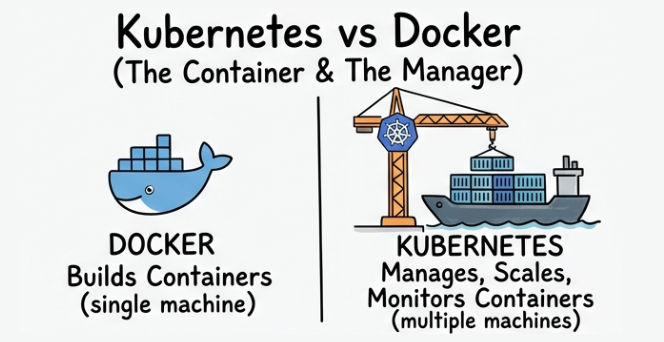
Container orchestration means automatically managing multiple containers across different systems in a structured way.
In real-world applications, you may have dozens or even hundreds of containers running together. Managing them manually becomes difficult and error-prone.
? This is where Kubernetes comes in.
Instead of manually starting, stopping, and scaling containers, Kubernetes handles everything automatically and ensures your application runs smoothly.
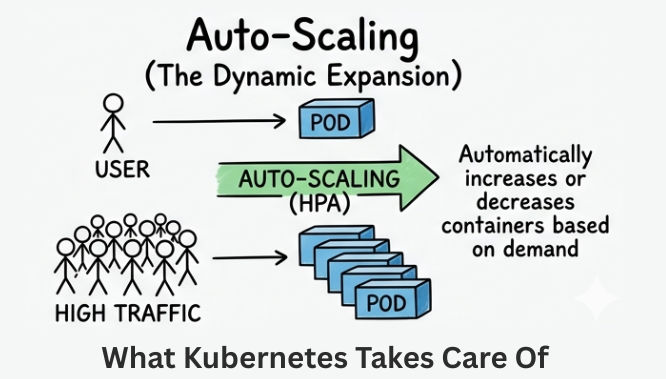
Kubernetes is widely used in real-world applications:
? Companies use Kubernetes to handle large-scale applications smoothly.
Kubernetes offers powerful features for modern applications:
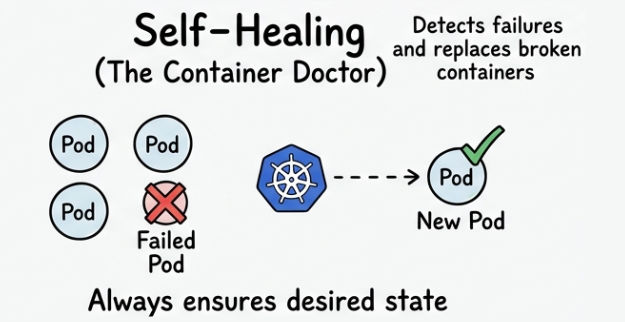
? These features make Kubernetes ideal for modern applications.
Kubernetes has become an essential tool in modern application development, especially when working with containerized applications. It simplifies complex tasks like scaling, deployment, and failure management, making systems more reliable and efficient.
By automating container management, Kubernetes allows developers to focus more on building features rather than handling infrastructure.
? If you are already using Docker, learning Kubernetes is the next step toward building scalable, resilient, and production-ready applications in real-world environments.
